Work
Thirty new projects from the last few years — production products, internal systems, brand books, and concepts. Filter by lens.
The same work as a PDF, twenty-four pages. Download selected work · PDF · 10.4 MB
Showing 30 of 30
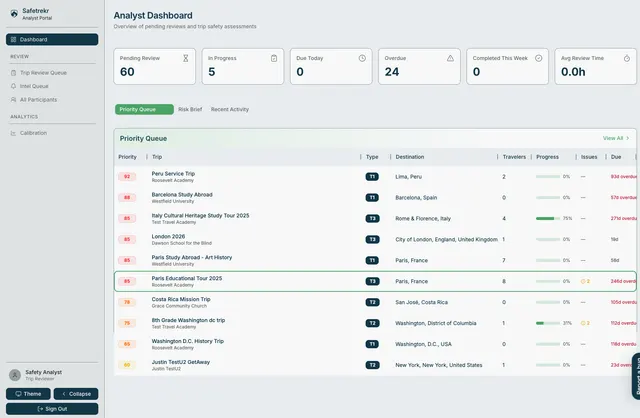
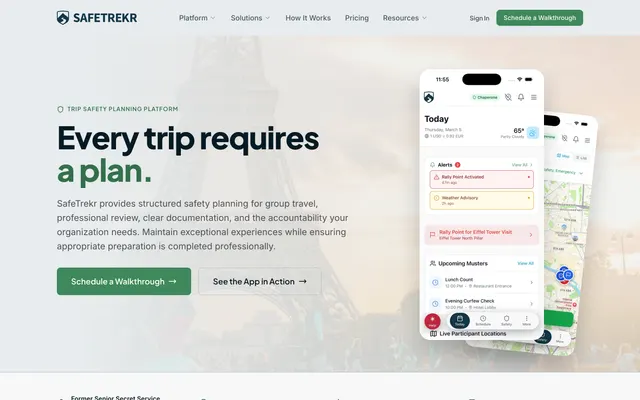
SafeTrekr Platform
Trip safety for whole organizations, in one production platform.
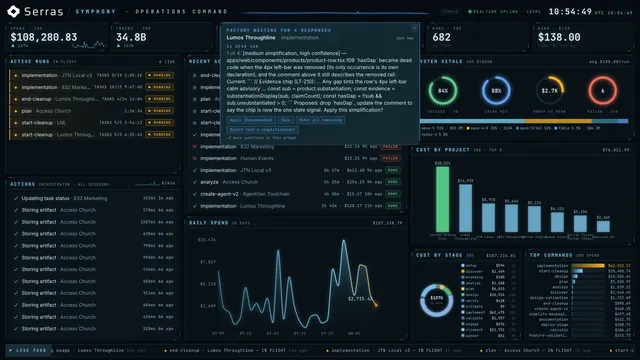
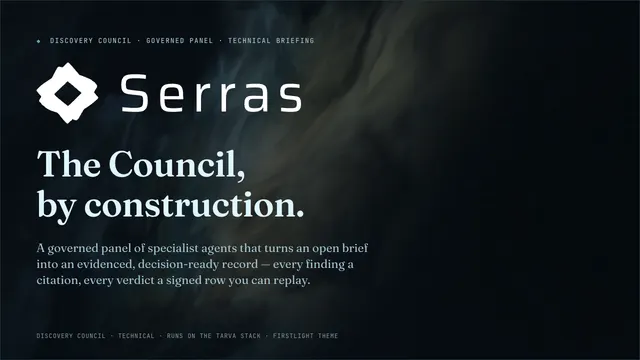
Serras
A governed AI delivery system, in closed beta. The abyss is the stage; amber is the decision.
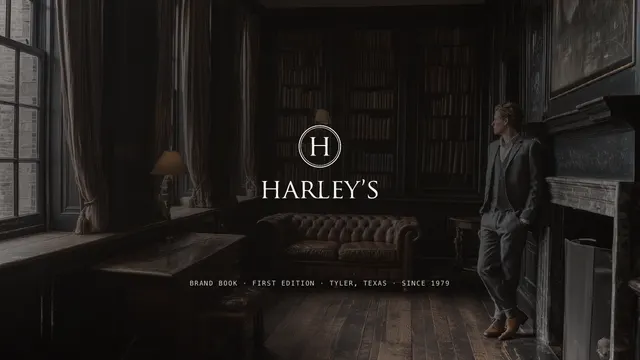
Harley's
A 40-year clothier gets a brand system.
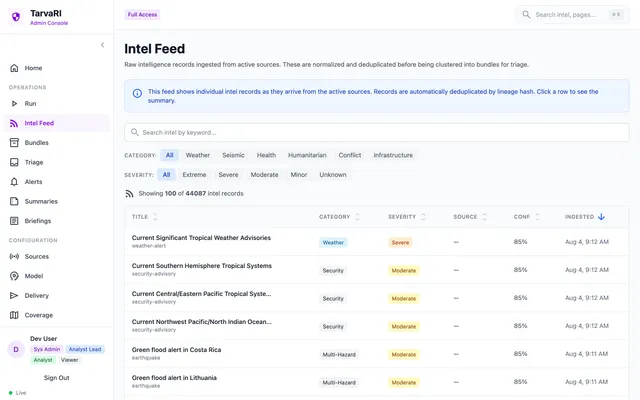
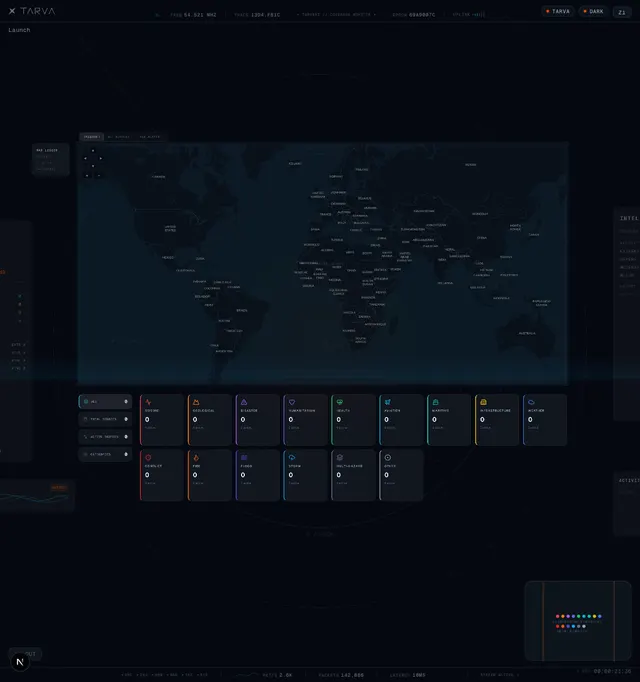
TarvaRI
Public risk feeds turned into trip-specific alerts.
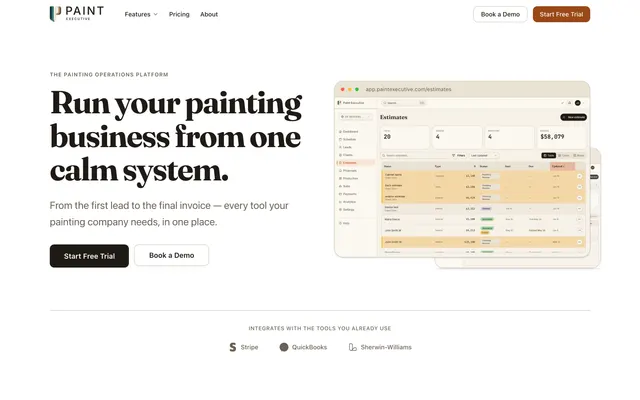
Paint Executive
Seven systems consolidated into one field-service product.
TarvaRI Alert Viewer
A map you can zoom from world to alert.
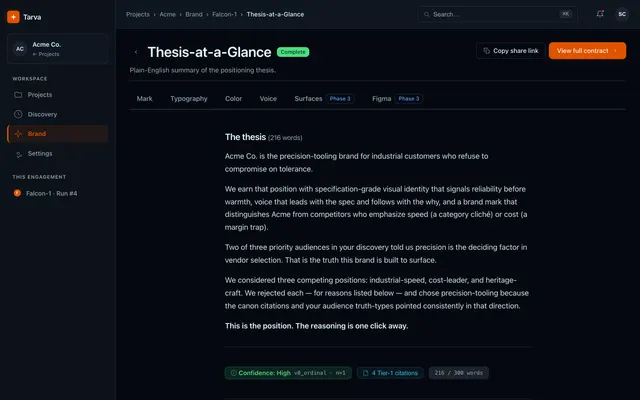
Tarva BXD
Brand decisions you can audit, reasoned against 766 principles.
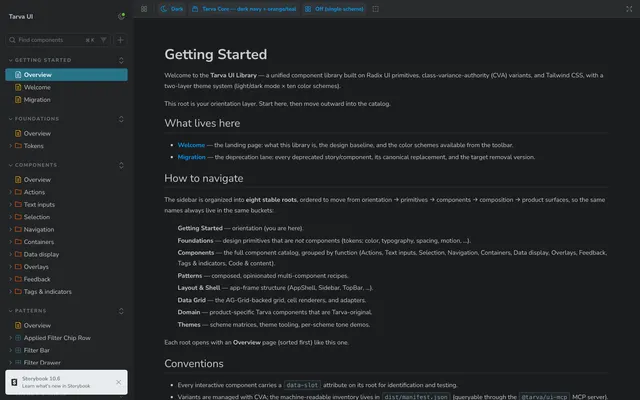
@tarva/ui
One component library, many brands, light and dark.
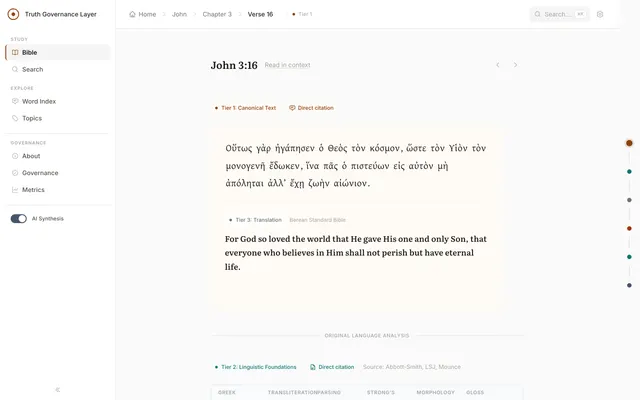
Truth Governance Layer
Provenance you can see, before you trust the answer.
SafeTrekr Website
The public case for reviewing every trip.
Discovery Council
Discovery with evidence, gates, and a human at the end.
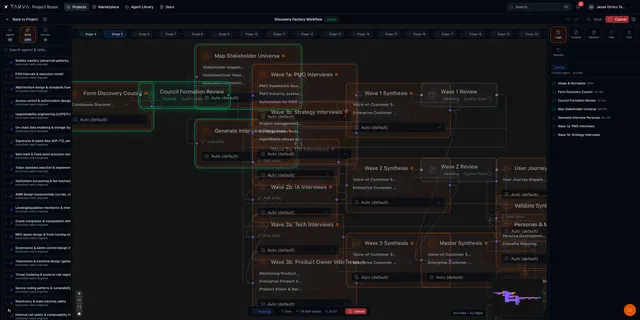
Tarva Project Room
Where agent work gets evidence, cost, and approval.
Tarva Convergence
Seven repositories, 21 shared packages, one platform.
AgentGen
140+ specialist agents, reproducible and versioned.
Lumos
Not a brand guide — a brand that behaves.
JTN AI Reaper
A credible identity for a new AI product, in days.
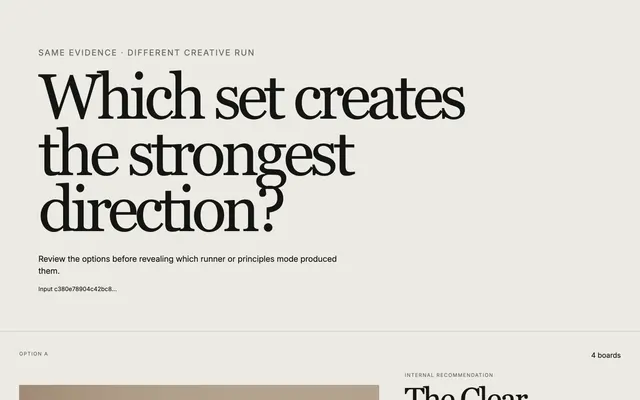
Mood Board Creator
Creative direction, tested blind against a control.
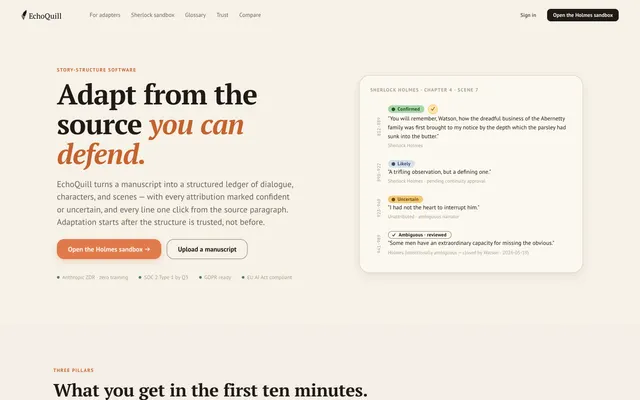
EchoQuill
Adapt a manuscript from a source you can defend.
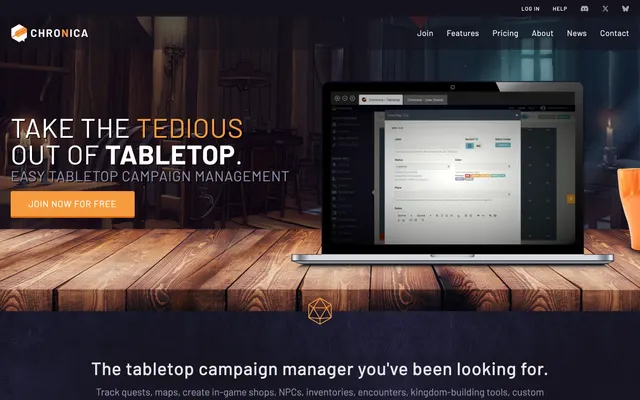
Chronica
Take the tedious out of tabletop.
Skill Resolver MCP
The right skill context, resolved deterministically.
Whitepaper Ensemble Factory
Two weeks of research and publishing, down to hours.
Patent Workflow
Source documents to claim drafts, with consensus checks.
Focal Aware Seizure Research
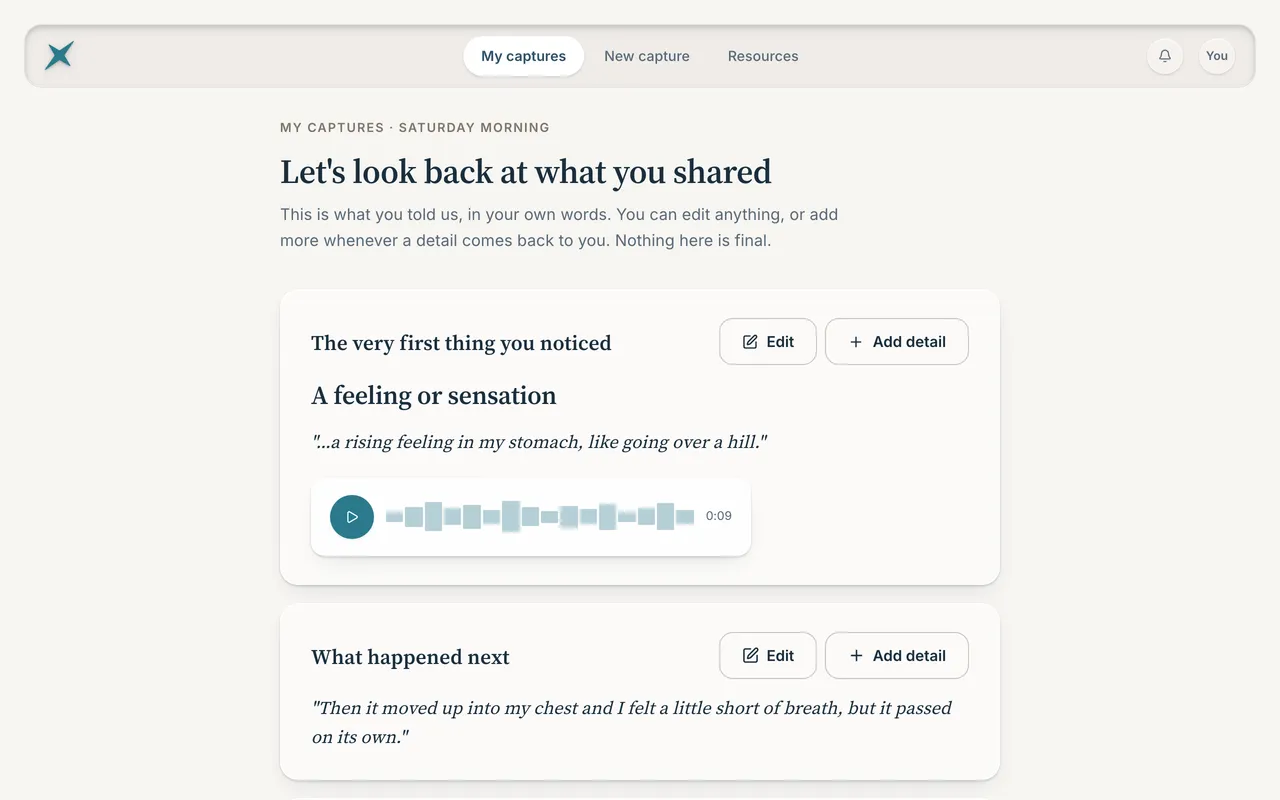
The first symptom in the patient's own words, captured before it fades.
Relevant Compliance
Compliance made legible for people who are not specialists.
Global Christian Relief
Story into action for a global relief nonprofit.
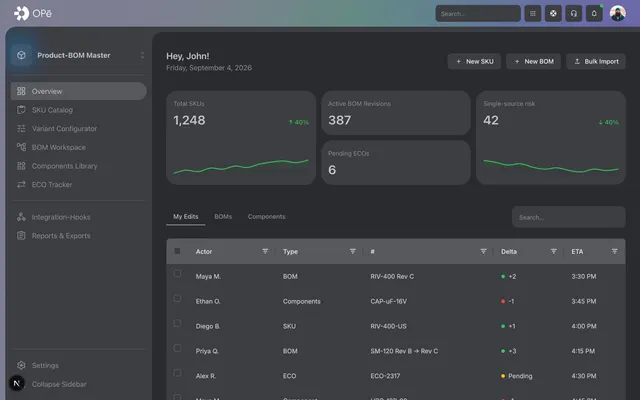
Tarva-ERP for OPē
A manufacturing ERP designed in Figma and taken through a 52-page prototype.
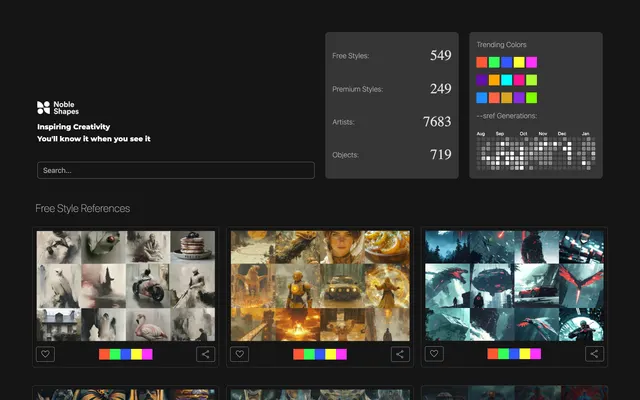
NobleShapes
Repeatable AI image styles, not one-off prompts.
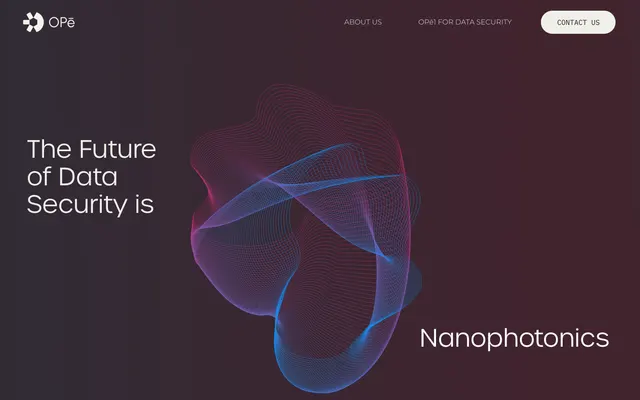
OPē website
Brand assets and a homepage system for a deep-tech company's public face.
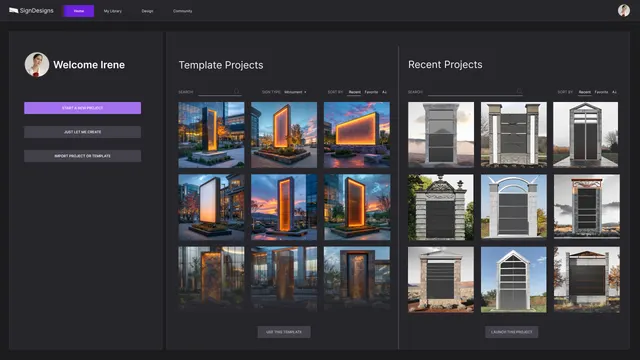
SignDesigns.ai
Design a custom sign before you buy it.
ListenBridge.ai
Translation for the moments that are not transactions.



















































Focal Aware Seizure Research
The first symptom in the patient's own words, captured before it fades.
What it is
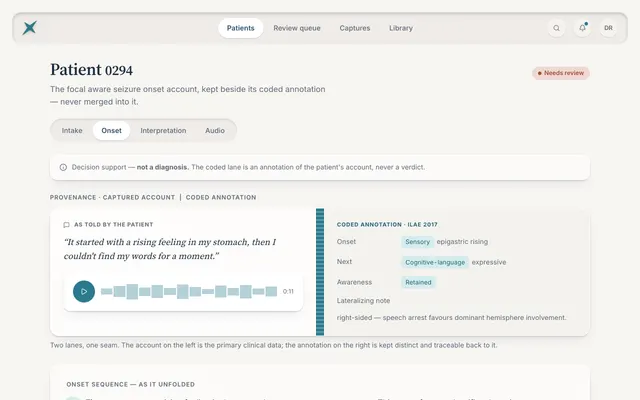
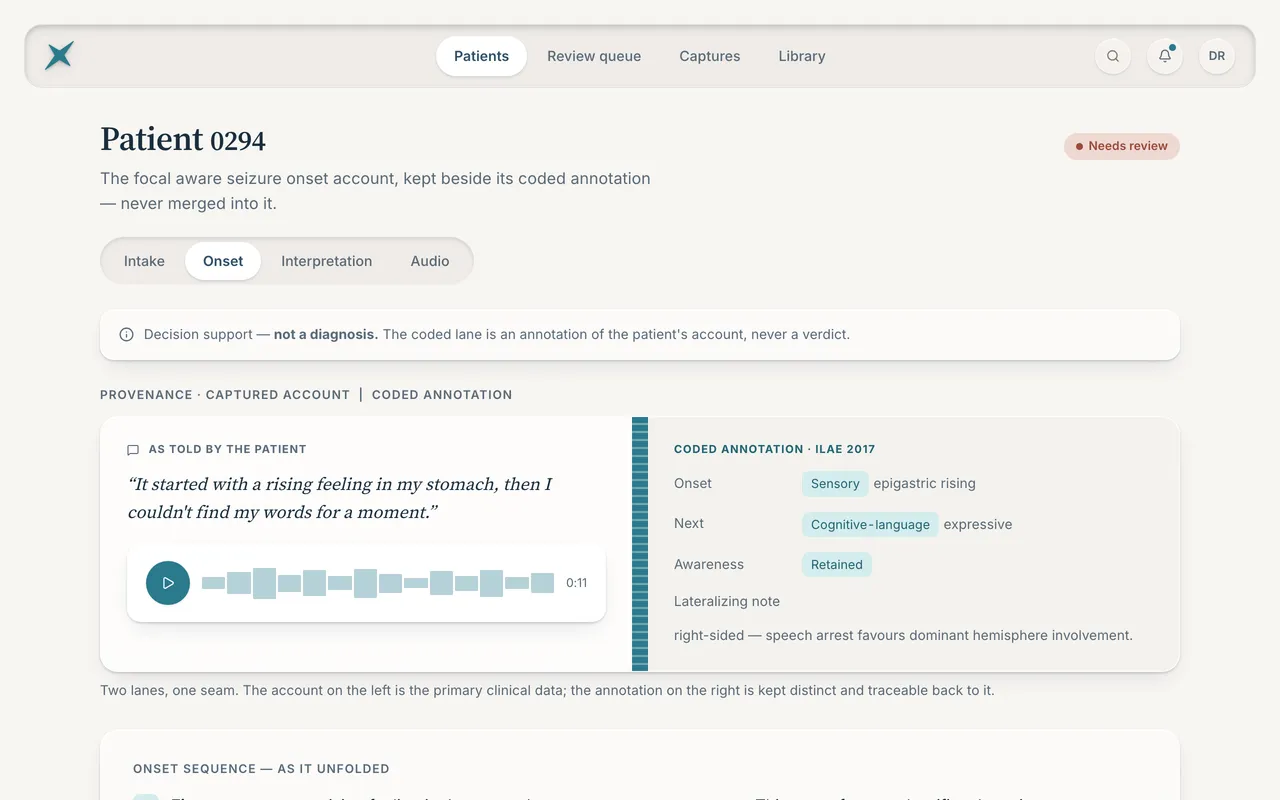
A non-diagnostic clinical research platform for focal aware seizures. It captures the first symptom and the exact sequence that followed in the patient's own words, close to the event, and presents that account to clinicians as decision support beside a separate, clearly marked ILAE-2017 annotation.
The problem
In a focal aware seizure the patient stays aware, so the patient is the primary instrument. Yet the account is usually taken weeks later, as free text in a ten-minute clinic slot, and the order of symptoms that carries the diagnostic signal is lost. Structured forms fix this badly: they sort the account into clinical categories before anyone has heard it.
What we solved
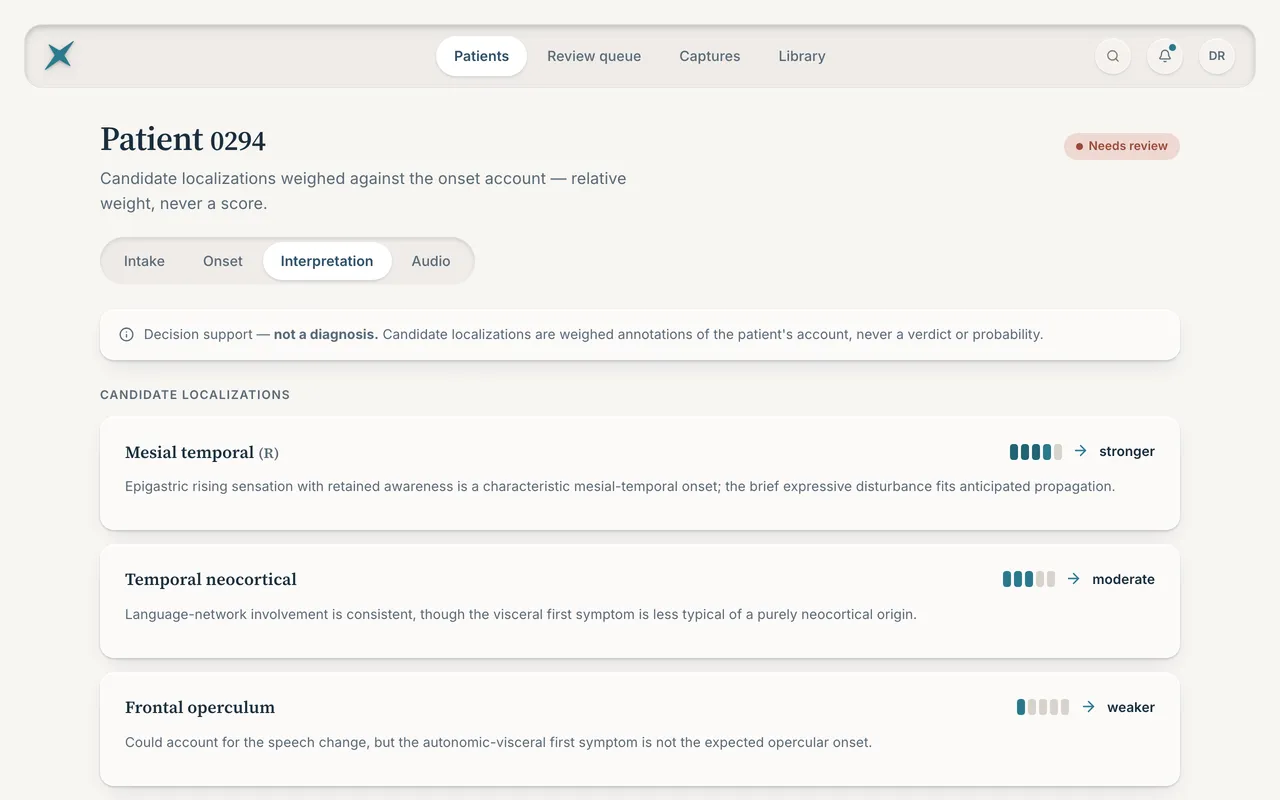
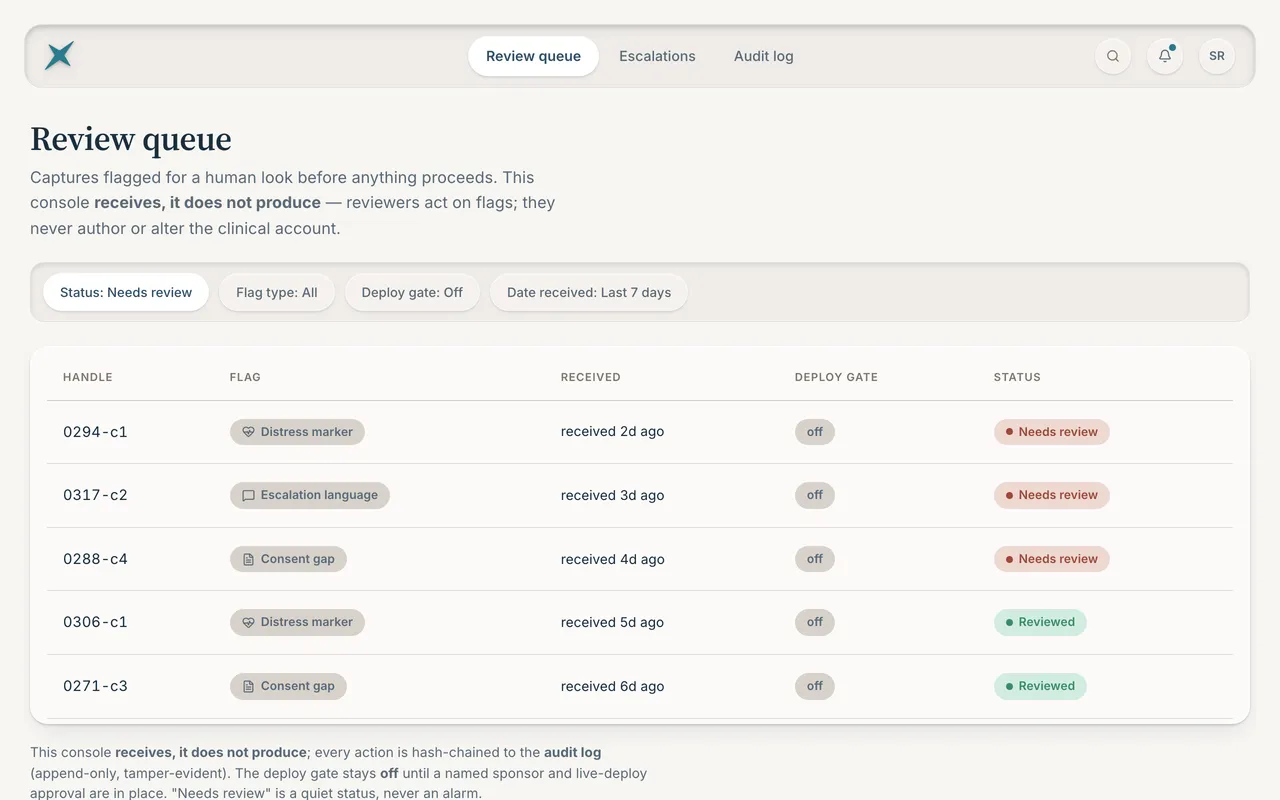
A design for six roles across watch, phone, tablet, and desktop, built on one rule: the patient's verbatim account and the coded annotation are two lanes joined by a visible seam, never fused. Confidence is shown as weight and direction, never a score. Stopping early is a normal ending, not an error. The work runs from council discovery through a 76-requirement product definition to a 78-screen click-through prototype on the Reading Room design system.
My role
I ran the project through Serras, the governed delivery pipeline: council discovery, analysis, product definition, and design. I led product framing, information architecture, UX/UI, the Reading Room design system on @tarva/ui, and the choice of direction, with AI assistance throughout.
- Serras pipeline
- @tarva/ui · Reading Room theme
- HTML click-through prototype
- Figma
- Next.js + Supabase (planned)
- SwiftUI watch capture (planned)
- 6 roles
- 4 device classes
- 76 requirements
- 78 screens
Six roles · four device classes · 76 requirements · 78 screens · prototype, not a product